Nederlands
 Français
 Deutsch
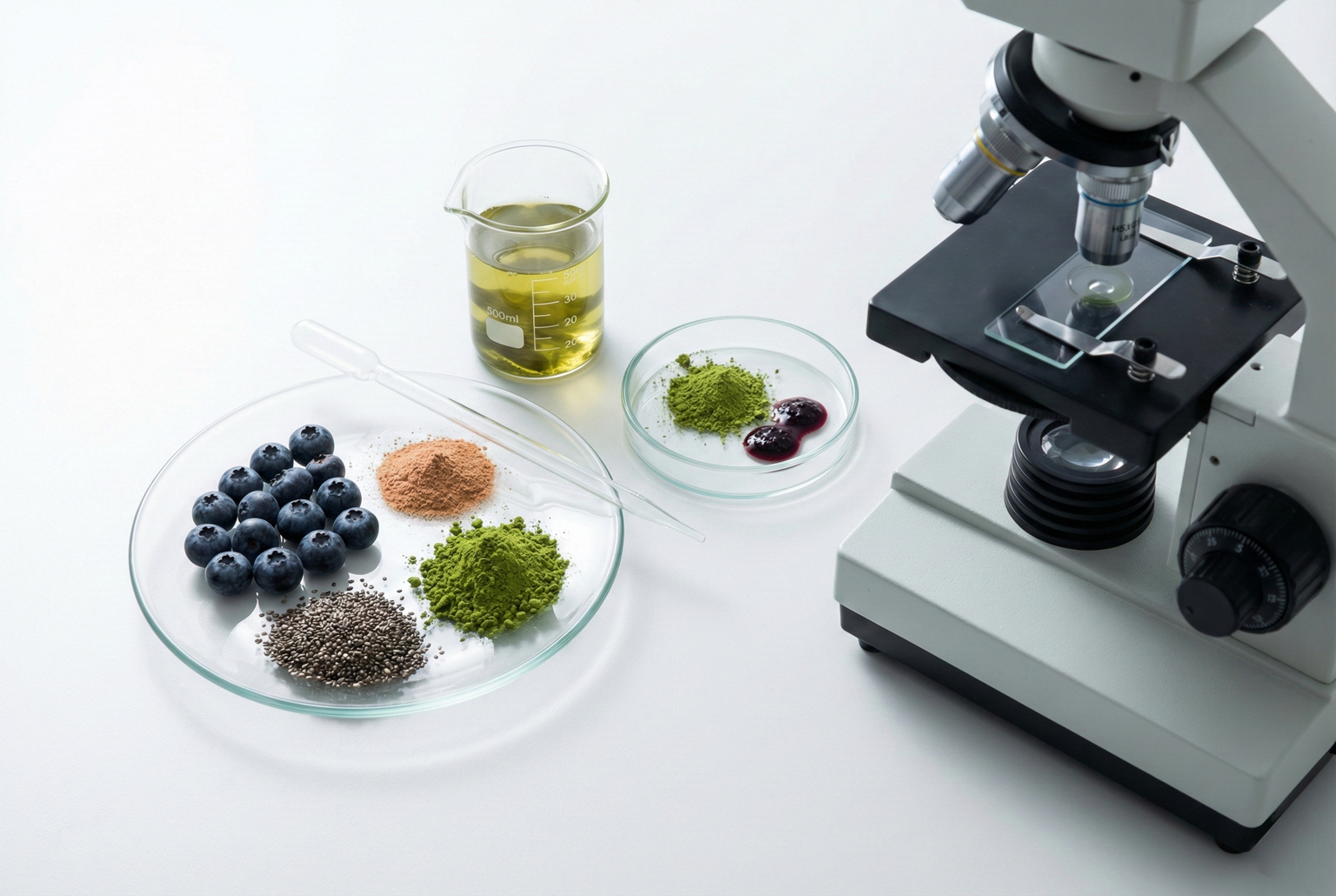
The cardiovascular system never relies on a single process. It depends on how well your cells handle oxidative stress, how calmly they respond to inflammatory signals and how efficiently they manage lipids and energy. These processes shape the environment in which your heart and blood vessels work every day. Research shows that several families of natural compounds interact with these pathways in meaningful biological ways. Understanding these mechanisms helps explain why certain foods and plant based ingredients appear so often in scientific discussions related to cardiovascular function.
Polyphenols
Before naming specific compounds, it helps to understand where the issue actually begins.
Every day, cells operate under load. This is a normal part of life. Breathing, movement, stress, environment. All of these contribute to the formation of reactive molecules which, in excess, can make it harder for cells to function in a stable way.
The body has its own mechanisms to maintain balance. The question researchers ask is: what influences how well these mechanisms perform?
One group of compounds that consistently appears in this context is polyphenols.
In the review Anthocyanins: mechanisms of antioxidant and anti-inflammatory action (2019, NIH), anthocyanins were shown to influence the activity of enzymes involved in cellular protection while at the same time lowering inflammatory signaling compared to models where these compounds were not present.
Another paper, Anthocyanins and Their Biological Effects (2015, Yonsei Medical Journal), reports reduced oxidative burden and more favorable conditions for the function of endothelial cells.
This matters because vascular cells respond directly to their environment. When conditions are more stable, they function more steadily. When the environment is more demanding, their responses become faster and more intense.
A similar direction appears in research on catechins. In Green Tea Catechins as Metabolic and Antioxidant Modulators, these compounds were associated with reduced levels of reactive molecules and changes in how cells manage energy.
What does this mean in simple terms?
Not that polyphenols “fix the heart.”
But that they contribute to more stable conditions in which cells operate, including vascular cells.
And it is these conditions that determine how the body handles everyday load.
At the source level, polyphenols are widely present in foods such as blueberry, black currant, pomegranate, acerola, green tea and cacao nibs.

Lignans
Not all processes related to the heart and circulation begin in blood vessels.
Many start earlier, in how the body manages fats and energy.
This matters because the way cells process lipids shapes the entire internal environment of the body.
In this context, researchers often focus on lignans.
In Sesame Lignans and PUFAs: Effect on Lipid Metabolism (2022, Nature), lignans were shown to influence the activity of PPAR receptors. These act as metabolic regulators, determining whether fats are used as energy or stored.
In models where lignans were present, changes were observed in how fatty acids were processed, along with more structured regulation of these pathways compared to models without them.
Another paper, Biological and pharmacological properties of lignans in sesame (2021, Molecules), indicates that lignans are also associated with reduced oxidative burden and support for metabolic balance.
What does this mean in practice?
Not that lignans “act on the heart.”
But that they influence how the body manages energy and fats.
And these processes define the conditions in which the circulatory system operates.
Lignans are found in foods such as sesame, linseed and schizandra.
Omega 3
Not all signals in the body work the same way.
Some accelerate cellular responses; others help to calm them down.
This becomes especially relevant in the context of inflammation. The process itself is natural, but problems arise when the response is too intense or lasts too long.
This is where omega-3 fatty acids come in.
In Omega 3 Fatty Acids and Gene Expression (2021, Genes), omega-3 presence was shown to influence how cells interpret inflammatory signals. In practice, this means cells respond differently than in conditions where these fatty acids are absent.
In the review Regulation of Immune and Inflammatory Responses by Omega 3 Fatty Acids (2023, Springer), experimental models showed lower levels of molecules responsible for maintaining inflammatory activity when omega-3s were present.
This is not about “switching off” inflammation, but about better regulation.
Another piece of the puzzle relates to blood vessels. In Effects of Omega 3s on Endothelial Cell Function (2015, Journal of Cardiovascular Pharmacology), higher availability of nitric oxide was observed. This molecule plays a key role in allowing blood vessels to expand and adapt to changing conditions.
What follows from this?
Omega-3 fatty acids do not act in a single place.
They influence both how the body responds to inflammatory signals and how blood vessel’s function.
That is why they appear so frequently in research related to the circulatory system.
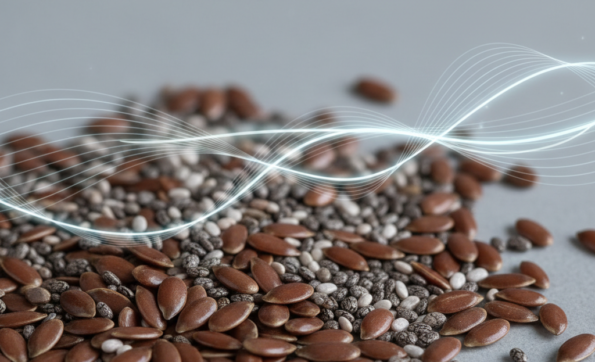
Omega-3 in the form of ALA can be found in foods such as linseed, chia seeds and walnut oil.
Antioxidants
There are situations where the body reacts faster and more intensely than needed.
This applies both to inflammatory responses and to how cells handle everyday load.
In research on spices with strong antioxidant activity, curcumin, a compound found in turmeric, appears frequently.
In Curcumin: A Review of Anti-Inflammatory and Antioxidant Mechanisms (2016, NIH), experimental models with curcumin showed higher activity of protective enzymes and lower inflammatory signaling compared to groups without it.
A similar direction is described in Curcumin anti-inflammatory antioxidant properties (2022, Springer), where reduced oxidative burden and more controlled inflammatory responses were observed.
This translates into more stable conditions for cellular function.
Cinnamon adds another element to this group. The compound cinnamaldehyde is studied in related contexts, although less extensively than curcumin.
A useful reference point comes from similar compounds such as shogaols found in ginger. In 6-Shogaol and Apoptosis in Cancer Cells (2014, Journal of Biological Chemistry), these compounds were shown to influence how cells respond to stress and adapt to more demanding conditions.
What does this mean?
Not that spices “act on the heart.”
But that they support how cells handle load and regulate their responses.
And these mechanisms shape the environment in which blood vessel’s function.
Compounds from this group are present in foods such as turmeric and cinnamon.

Where Biology Meets the Plate
Taken together, these findings highlight a broader biological story. Polyphenols interact with antioxidant and inflammatory pathways that shape endothelial function. Lignans influence lipid and energy metabolism. Omega 3 fatty acids shift inflammatory gene expression and nitric oxide communication. Spice derived compounds help regulate oxidative pressure and cellular stress responses. These mechanisms do not describe clinical outcomes. They explain how natural compounds engage with the molecular systems that support cardiovascular physiology.
You can support these processes daily through thoughtful choices on your plate, reaching for foods and ingredients naturally rich in these compounds.
Feel strong. Live healthy. Start on your plate.
FAQ
What does “supporting heart and circulation through biological mechanisms” actually mean?
In this context, “support” does not refer to treating or preventing any condition. It describes how certain natural compounds interact with biological pathways that are part of normal cardiovascular physiology. These pathways regulate processes such as oxidative balance, inflammatory signaling and endothelial communication. Research helps us understand how these mechanisms work, without translating them into guaranteed outcomes.
Why does this article focus on mechanisms instead of health outcomes or benefits?
Health outcomes depend on many individual factors and cannot be inferred directly from biological pathways alone. Scientific studies often examine how specific molecules influence cellular signaling or regulatory systems. Focusing on mechanisms allows us to present what research actually shows, without overinterpreting the data or making claims that go beyond the evidence.
Are the studies mentioned here based on human research or laboratory models?
The studies referenced in this article include a mix of laboratory experiments, animal models and human related research, depending on the compound and pathway studied. Each type of research contributes different insights. Together, they help build a broader understanding of how biological systems function, even though they do not all represent direct clinical evidence.
Why do oxidative stress and inflammation appear so often in cardiovascular research?
Oxidative stress and inflammatory signaling are central processes in many biological systems, including the cardiovascular system. They influence how cells respond to everyday challenges and how tissues adapt over time. Because of their central role, these processes are frequently studied when researchers explore the biological foundations of heart and circulatory function.
How can this scientific knowledge be used in everyday food choices without making medical claims?
Scientific insights into biological mechanisms can inform how we think about food, ingredients and dietary patterns, without turning them into prescriptions or promises. Many natural compounds discussed in research are found in everyday foods. You can use this knowledge to make thoughtful, informed choices on your plate, focusing on variety and quality rather than specific outcomes.
Explore our category: Heart and Circulation
Find natural ingredients that support your heart. Every day, with ease and intention.